Part of: Products › Whey protein
Just started your first tub and your stomach is complaining? Or someone at home is sure whey will ruin your kidneys? Below is every whey protein side effect people in India ask about, how often it actually happens, and what to do if it happens to you. New to whey? Our whey protein guide covers the basics first.
Quick answer: whey protein side effects
Whey protein is safe for most healthy adults at 1–2 scoops a day. The common side effects are gas and bloating, usually from lactose, and acne in some people. No good evidence shows it harms healthy kidneys or liver or causes hair fall. In India, the bigger risk is a fake or spiked tub.
- Gas or bloating? Switch to an isolate or try half a scoop.
- Kidney or liver disease? Ask your doctor first.
- Read the label for amino spiking and hidden extras.
Whey protein side effects at a glance
| Side effect | How likely | Usual cause | What helps |
|---|---|---|---|
| Gas, bloating, loose motions | Common | Lactose, sweeteners, a big scoop | A smaller scoop or a different type (see below) |
| Acne on face, back or chest | Sometimes | Milk proteins push up oil-gland signals | Lower the dose or try plant protein |
| Weight gain | Sometimes | Shakes added on top of full meals | Count the shake as food |
| Kidney damage | Not seen in healthy kidneys | Only a concern with existing kidney disease | A kidney test first if you have diabetes or high BP |
| Liver damage | Rare | Herbal add-ons, hidden steroids, contamination | Plain whey from a genuine seller |
| Hair fall | No proof | Spiked tubs, crash diets, low iron | Check the tub and your blood tests |
Is whey protein safe?
Whey is milk protein. It’s the liquid left behind when milk is turned into paneer, filtered and dried into powder. So if milk and paneer suit you, the protein part of a scoop is unlikely to cause trouble.
The International Society of Sports Nutrition puts 1.4 to 2.0 g of protein per kg of body weight a day in the safe range for people who exercise, and treats protein powder as an ordinary way to get there.
India’s own advice is more cautious. The ICMR-NIN Dietary Guidelines for Indians (2024) tell people to avoid protein supplements for building muscle, because most of us can meet our needs from food and very high intake over years may affect kidneys and bones. If your plate already has dal, curd, paneer or eggs at most meals, you probably don’t need a scoop at all. If you’re 20 to 30 g short every day, a scoop is a cheap way to close that gap. The protein calculator shows which group you’re in.
Gas, bloating and loose motions
This is the complaint we hear most, and it usually starts in the first week. It mostly comes down to:
- Lactose. A lot of Indian adults don’t digest it well, and a whey concentrate still has a few grams per scoop.
- Sweeteners and gums. Sucralose, acesulfame-K and sugar alcohols upset some stomachs.
- A big scoop in milk, first thing in the morning. That’s a lot of dairy at once.
Try these one at a time so you know what worked:
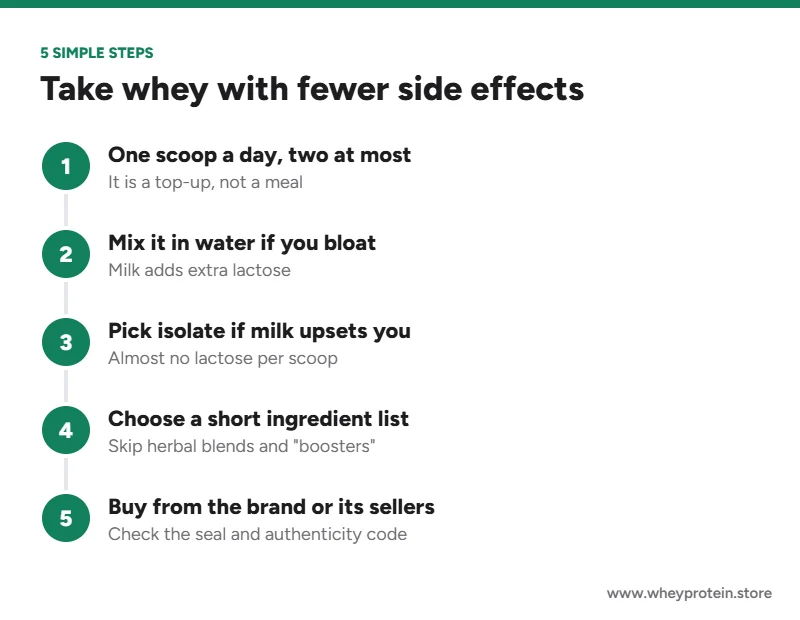
- Mix the scoop in water instead of milk.
- Take half a scoop for a week, then go back to a full one.
- Move to a whey isolate, which has hardly any lactose. Our concentrate vs isolate guide compares them.
- Still uncomfortable? An unflavoured whey tells you if the sweetener is the trigger.
Constipation is a different story. It tends to happen when shakes start replacing proper meals, so the fibre from dal, sabzi and fruit drops. Keep the meals and drink more water.
Does whey protein cause acne?
For some people, yes, and this one is backed by real cases. Dermatologists in Turkey reported six teenage gym-goers who broke out on the back and chest after starting whey. Their skin improved once they stopped. Earlier reports in bodybuilders saw the same thing on the face.
Milk proteins nudge up insulin and IGF-1, and those signals make oil glands busier. If milk, curd or paneer already give you pimples, you’re more likely to react.
What to try: drop to one scoop for a month and watch your skin. If nothing changes, swap to pea or soy protein for a few weeks and compare. Painful or scarring acne needs a dermatologist, not a wait-and-see.
Whey protein side effects on the kidneys
This is the big worry, usually from parents. A 2018 review in the Journal of Nutrition looked at 28 studies covering more than 1,300 people and found higher-protein diets made no difference to kidney function in healthy adults. That held even for people with obesity, high BP or type 2 diabetes whose kidneys still worked normally.
Your kidneys filter a little more after a protein-heavy day, the same as after a big plate of rajma-chawal with paneer. A healthy kidney is built for that.
Weak kidneys are another matter. People with chronic kidney disease are usually told to limit protein, and a daily shake can quietly take them over that limit. If you have diabetes, high BP, past kidney stones or kidney disease in the family, get a simple creatinine and eGFR test before you start. Also, going past about 2 g of protein per kg a day doesn’t build extra muscle, so there’s no point pushing higher.
Is whey bad for the liver?
Plain whey isn’t known to harm a healthy liver. When gym-goers do turn up with liver injury, doctors usually find something else behind it: herbal fat burners, hidden steroids, or a contaminated product.
India has a specific problem here. In 2024, a team led by a Kerala hepatologist tested 36 popular protein supplements sold in the country. The results, published in Medicine, showed about 70% fell short of their protein claims, and a few carried fungal toxins or pesticide traces. Herbal-blend powders came out worst, while plain whey from bigger makers did better.
Some experts felt the study was too strict about what counted as mislabelled, and that’s fair. Still, a tub with fewer extras gives fewer things a chance to go wrong. Fatty liver or any liver condition? See the doctor list further down.
Can whey protein cause hair fall?
No good study shows that whey causes hair loss. The fear comes from gym talk about DHT, the hormone linked with male-pattern baldness, but protein itself doesn’t raise it.
If your hair started thinning after you began a “whey”, look at these first:
- A spiked or fake tub. Some cheap products hide steroids that can trigger shedding. Our fake whey checklist helps you check yours.
- A crash diet. Hard calorie cuts often cause shedding two or three months later.
- Low iron, B12, vitamin D, or thyroid trouble. All common in India, all easy to test.
- Your genes. Pattern hair loss often begins in the twenties, right when many people join a gym.
Hair is made of protein, so eating enough of it supports hair rather than harming it.
Does whey affect men’s hormones or sex drive?
A common worry in Indian gyms is that whey lowers testosterone or affects performance in bed. Plain whey is a dairy protein with no hormones in it, and there’s no evidence it lowers testosterone in healthy men. The trouble, again, is with products that aren’t plain whey. Tubs spiked with steroids or “test booster” herbs can upset hormones, and stopping a hidden steroid can cause a crash in mood and libido. If a protein powder promises big hormonal effects on the label, put it back.
Weight gain
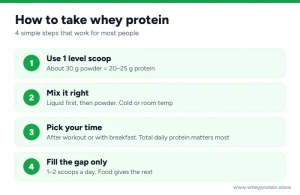
A scoop has around 110 to 130 calories, about the same as a glass of toned milk. People gain fat when the shake is added on top of every meal, blended with full-cream milk, banana and peanut butter, and kept going on rest days. Count your shake as part of the day’s food and it suits fat loss as well as muscle gain.
Optimum Nutrition (ON) whey protein side effects
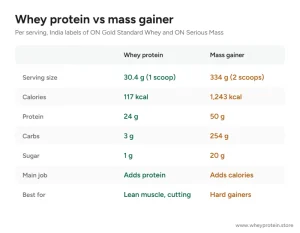
Plenty of people search for this brand by name. ON Gold Standard 100% Whey is mostly whey isolate, with some concentrate and hydrolysed whey. A 30.4 g scoop gives 24 g protein and 117 calories, and it contains milk and soy lecithin, sweetened with acesulfame-K.
Expect the usual whey effects: some gas if you’re lactose-sensitive, or a mild upset if artificial sweeteners disagree with you. Nothing on the India label is a red flag. The bigger risk with ON is buying a copy, since it’s one of the most faked tubs in India. Stick to official sellers and verify the code on the pack.
The real risk in India: what else is in the tub
Most bad experiences we hear about come down to what’s printed on the label, or missing from it:
- Amino spiking. Cheap amino acids like glycine or taurine pad out the protein number. You pay for whey and get less.
- Long proprietary blends. Herbs, fat burners and boosters inside a protein powder add risk and rarely add benefit.
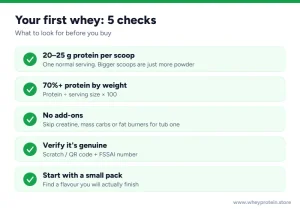
- Fakes and repacks. Watch for a broken seal, no FSSAI licence number, spelling errors, or a price far below MRP.
- No lab report. Brands that publish batch tests are easier to trust.
Every tub in our product directory has its label facts, sweeteners and any spiking red flags listed.
How long do whey side effects last?
Most of them fade quickly once you change the right thing, which also tells you whether whey was the cause.
- Gas and bloating: usually better within two or three days of switching to water or a smaller scoop. If it’s still there after two weeks on isolate, whey may simply not suit you, and that’s fine. Plenty of people do well on curd, paneer and eggs instead.
- Loose motions: should stop within a day or two of cutting the dose. If they last longer, or come with fever or blood, it isn’t a whey problem.
- Acne: slow. Skin takes four to six weeks to show a change after you lower the dose or stop, so don’t judge it after a few days.
- Weight gain: sorts itself out once the shake is counted in your daily food rather than added on top.
Anything that keeps getting worse after you’ve stopped the powder for a couple of weeks is worth a proper check-up, because the tub probably wasn’t the cause.
Who should check with a doctor first
- Kidney disease or reduced kidney function
- Liver disease, including fatty liver
- A milk allergy (different from lactose intolerance, where isolate often works)
- Pregnancy or breastfeeding
- Teens under 18, who usually do better with more food than with powders
- Regular medicines for diabetes, BP or thyroid
Stop and get medical help for swelling of the face or lips, hives, breathing trouble, dark urine, yellowing eyes or skin, or stomach pain that doesn’t settle.
A note from me: when someone sends me a tub they think is giving them side effects, the first thing I check isn’t the protein number on the front. It’s the amino acid table on the back. If glycine is suspiciously high, or the ingredient list runs to fifteen lines for a “whey protein”, that tells me more than any review. Lovely
Key takeaways
- Gas and bloating are the most common side effects, and they’re easy to fix.
- Acne can flare in some people. Stopping whey usually clears it.
- Healthy kidneys handle higher protein well, according to research.
- Liver problems in gym-goers usually come from fat burners or steroids, not plain whey.
- Whey doesn’t cause hair fall or lower testosterone.
- Buy genuine tubs. Fakes and spiked products are the real danger.
FAQs
Is it safe to take whey protein every day?
For most healthy adults, yes. One or two scoops a day alongside normal meals is well within the amounts studied. It becomes a question only if you already have kidney or liver disease, or your total protein goes far above about 2 g per kg of body weight.
Does whey protein cause heat in the body?
Many people in India say whey “makes the body hot”. There’s no scientific basis for whey raising body heat. What people usually notice is pimples, loose motions, or simply not drinking enough water while training in summer. Mix it in water, keep the dose sensible and drink more through the day.
Are there whey protein side effects for women?
Women get the same side effects as men, mainly gas and bloating. Whey has no hormones and won’t make you bulky. If you’re pregnant or breastfeeding, pick an unflavoured whey without herbs and check with your gynaecologist.
Can teenagers take whey protein?
A teen who eats well rarely needs it. Milk, curd, paneer, eggs, dal and soy cover most needs. If a dietitian does suggest a supplement, choose a plain whey with no stimulants or test-booster herbs.
What happens when you stop taking whey?
Nothing harmful. You keep your muscle as long as you keep training and your total protein stays up, so swap the scoop for curd, paneer, eggs or chana.
This guide is for education only and is not medical advice. Talk to a doctor or registered dietitian about your own health needs.
Can whey protein be taken in pregnancy?
Only with your doctor’s okay. Protein needs rise in pregnancy, but most doctors prefer food first, and some tubs contain added herbs, caffeine or sweeteners. If your doctor agrees, pick a plain whey from a trusted brand.
Will whey protein make you gain weight?
Only if your total calories go up. A scoop has about 110–130 calories. Used in water in place of a snack, it won’t cause weight gain. Added on top of meals with full-cream milk, it can.