Part of: Products › Whey protein
Fake and refilled whey is a real problem in India. It turns up most often on cheap marketplace listings and in small shops selling “imported” tubs at a big discount. You can’t measure protein at home, but you can catch most fakes in about five minutes, before you even break the seal. These are the seven checks we’d run on any tub.
Quick answer: how to spot fake whey protein
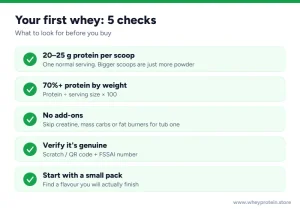
Buy only from the brand’s own site or its official seller, verify the scratch or QR code on the brand’s website, and look up the 14-digit FSSAI number on FoSCoS. Then check both seals and the label print before you open the tub.
- A price far below the brand’s own site is the first red flag.
- Home tests like burning the powder aren’t reliable.
- Even genuine tubs can be under-dosed, so brands with lab reports are safer.
1. Who is actually selling it?
The safest places are the brand’s own website or app and its official store on Amazon. On any marketplace, look at the “Sold by” name, not “Fulfilled by”. Fulfilment only means the warehouse shipped it. And if one listing is far cheaper than every other seller, there’s usually a reason.
2. Verify the authenticity code
Most big brands put a scratch code, hologram or QR code on the tub or under the cap. Enter it on the brand’s site. Optimum Nutrition, for example, uses authenticateon.in (see our Optimum Nutrition brand page). If the site says the code was already used, or a brand that always has a code shipped you a tub without one, don’t open it. Return it.
3. Check the FSSAI licence
Every supplement sold in India has to show a 14-digit FSSAI licence number. You can look it up free on the FSSAI FoSCoS website, and the name that comes up should match the brand, maker or importer on the label. Imported tubs also need an importer sticker with the importer’s name, address and its own FSSAI number.
4. Read the label like a customs officer
A genuine label has the MRP, batch number, manufacturing and expiry dates and a customer-care number. Blurry print, spelling mistakes, a crooked sticker or a label that peels off too easily should make you suspicious. Open the brand’s website on your phone and compare the photos side by side.
5. Check both seals
The outer shrink-wrap and the foil seal under the cap should both be intact. A loose or re-glued inner seal is the classic sign of a refilled tub.
6. Look at the powder, but don’t over-trust it
A strange smell, hard lumps, or a colour that looks very different from your last tub are good reasons to stop and check. The viral “tests”, like heating the powder or mixing it in hot water, can’t prove protein content. Use them as hints, nothing more.
7. Look for lab reports
Some brands publish batch-wise lab reports or third-party tests. This matters even for genuine tubs, because an original product can still carry less protein than the label says. On every product fact card we also flag added amino acids like glycine, a trick called protein spiking.
From the editor: how fakes are really made
Most fake whey isn’t mixed in someone’s kitchen. It comes out of proper warehouses with filling machines. A genuine brand buys good raw protein that costs roughly ₹3,300 to ₹3,500 a kg. A faker buys low-grade protein at about a quarter of that price, hides the taste with flavour and fillers, then copies the tub and label exactly. I’ve seen fakes carry only 30 to 50% of the protein printed on the label, and you have no idea what else went in.
The spiking trick is why they get away with it. The standard lab check counts nitrogen, and every amino acid has nitrogen in it. Throw in cheap arginine or BCAAs and the test reads it as protein. Catching that needs a full amino acid profile test, which costs far more, so most batches never get one.
Fakes sell best wherever buyers are hunting hardest for a bargain. That’s why I’m most careful with small-town shops and listings that are suspiciously cheap. If the price looks too good, the protein usually isn’t.
— Lovely, editor at wheyprotein.store.
Once a tub passes these checks, compare protein per scoop across brands on our compare page, and see what you really pay per gram of protein with the protein cost calculator. New to whey? Start with our whey protein guide.
Key takeaways
- Check who the seller is (“Sold by”), not who ships it.
- Verify the authenticity code on the brand’s own website.
- Match the FSSAI licence name with the brand or importer.
- Look for MRP, batch number, dates and clean print.
- Both the outer wrap and the inner foil seal must be intact.
- Smell or lumps that feel off? Stop and contact the brand.
FAQs
Can I test whey protein at home?
Not reliably. Water and heat tricks can hint that something is off, but only a lab can measure how much protein is really in the tub.
Is whey sold on Amazon fake?
Not when the seller is the brand or an authorised partner. Check the “Sold by” name, then verify the scratch code and FSSAI licence when it arrives.
What do I do if my whey is fake?
Stop using it. Keep the tub and the invoice, raise a return with the seller, report it to the brand, and you can file a complaint with FSSAI on its consumer portal.
Are cheaper Indian brands more likely to be fake?
Fakers copy whatever sells, Indian or imported. Where you buy and whether the code and licence check out matter more than the brand’s country.
Is a 5 kg whey tub at a big discount safe to buy?
Be careful. Big tubs at deep discounts are a common target for fakes and refills. Compare the price with the brand’s own site, check the “Sold by” name, and verify the authenticity code as soon as it arrives.